PALIANYTSIA 2022
PALIANYTSIA 2022


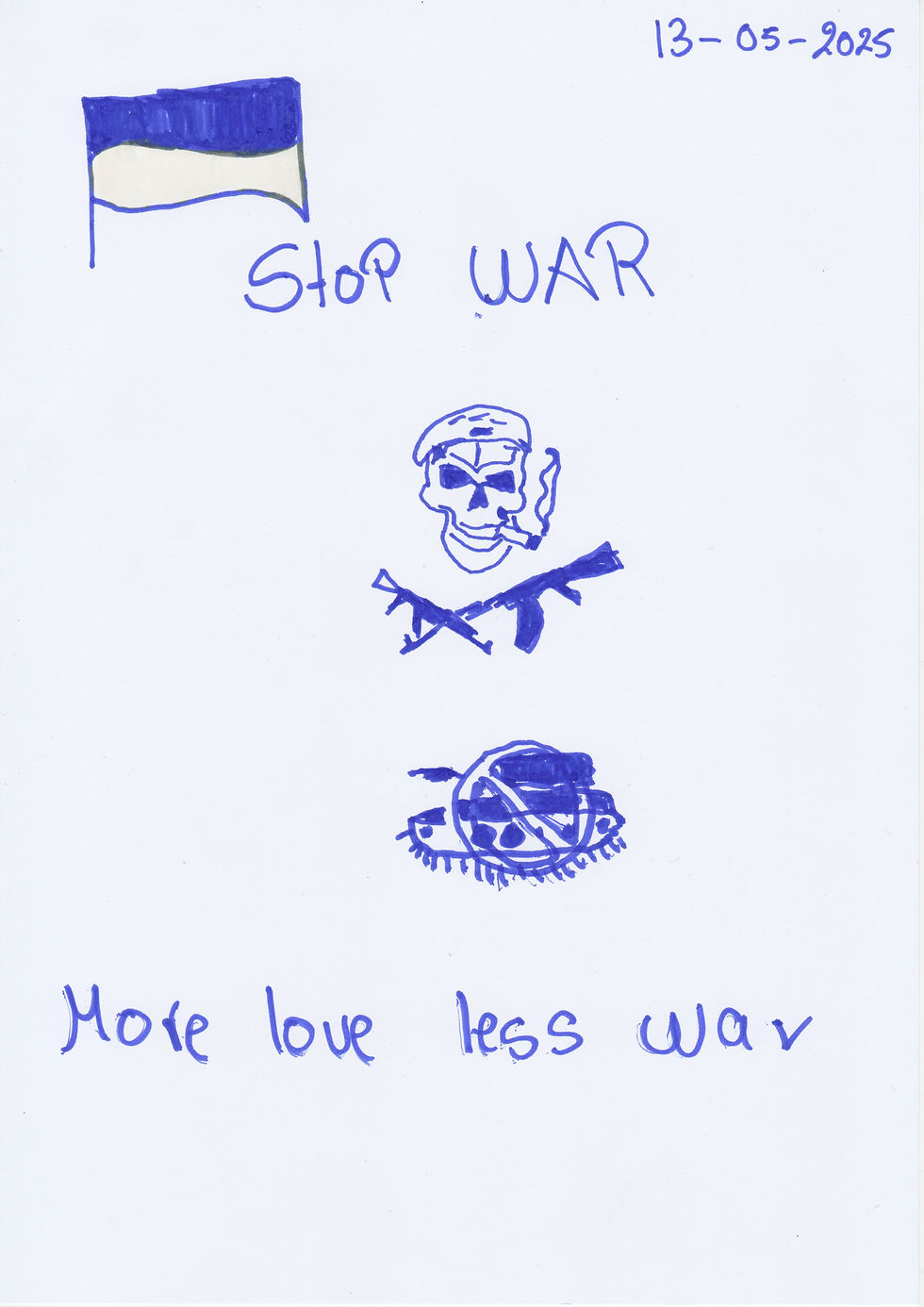


Kharkiv region, Ukraine, 2025
Writing a letter from the front line has never been easy. “I’m fine, don’t worry about me” rings hollow when written by a soldier in combat. Yet freeing oneself from such clichés is just as difficult, because the reality of life at the front defies verbal description. In the end, what matters most is the message itself—the simple fact that it exists. A letter that, by its very presence, testifies that someone is still alive to send it. It is enough to sign one’s name or draw the first thing that comes to mind—to “imprint” one’s existence on a sheet of paper.
In her work Military Mail Express, Zhanna Kadyrova highlights this aspect of communication as a performative act inseparable from materiality and the human body. Unlike soldiers in past wars, today’s fighters are not entirely cut off from society and sometimes have access to the internet. Yet such digital communication lacks a “body.” The physical form of a letter corresponds more truthfully to what needs to be said: Russia’s war of aggression is not something virtual but something that strikes real bodies, souls, and lives—of both defenders and civilians.
Kadyrova has created an envelope that resists the logic of both the postal system and contemporary modes of communication. It is a metal envelope, too heavy to send, its surface perforated by shrapnel. The messages inside come mainly from Colombian fighters of the Guajiro unit, who joined Ukraine’s struggle against Russian aggression. The unit was named after their first fallen comrade—sadly, not the last. Among all nationalities represented in the international brigades, Colombians form one of the largest groups, and they have suffered the highest number of casualties.
Zhanna’s aim is to personally deliver their letters to Colombia—and to bring back responses and messages of support to the soldiers at the front.
After two weeks of travel across Poland, Italy, Spain, and Colombia, the heavy metal envelope carried on Kadyrova’s back reveals how difficult it is, in today’s economically globalized yet politically fragmented world, to lend true weight and universal validity to a message sent by those fighting against imperialism.
Kadyrova combines her sculptural practice with a reference to Mail Art, an art movement that emerged in the 1960s with a vision of a more egalitarian and global approach to artistic creation and distribution. The tension between a material sculpture and Mail Art—which by its nature flirts with dematerialization—embodies the paradox of how difficult it remains to deliver certain messages, even in the so-called “information age” of the 21st century.
Amid the constant flood of data and news, we are reminded that empathy does not arise from the quantity of information, but from the subtle process of sharing and the ability to connect information to one’s own lived experience.
As a messenger, Kadyrova meets people along her route who live in peaceful, transit countries—people for whom the daily reality of war feels distant, yet who are drawn to the “secrecy of correspondence.” The sealed metal envelope provokes questions they have long since stopped asking.




11,000 kilometers — from Kharkiv to Medellín, through Poland, Italy, and Spain.
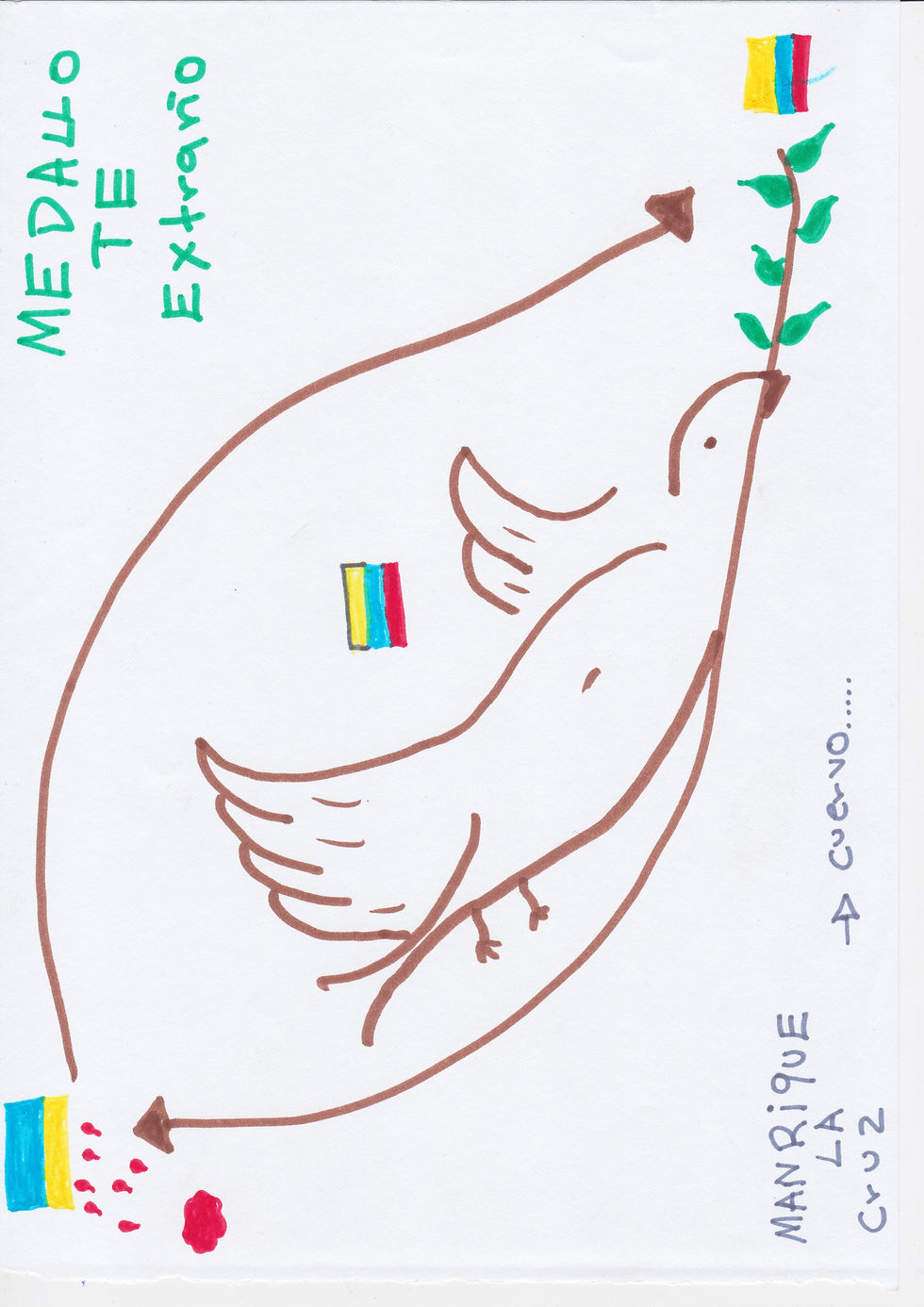
In Medellín, where the envelope was exhibited, visitors to the biennale were invited to write or draw messages for Colombian soldiers serving in the Ukrainian army. Most of them had never met these fighters, yet the response was overwhelming.
Solidarity, after all, is the ability and the willingness to engage—mentally, materially, and physically—even when something does not concern us directly. To write or draw something by hand for people risking their lives on another continent is the first step toward genuine international solidarity.
On October 17, 2025, representatives of the Colombian fighters received the messages from their unknown compatriots, personally delivered by Zhanna Kadyrova. Not much time had passed since the original letters were sent to Colombia—but some of the addressees would never read the replies, as they were no longer alive.
The calm of the gallery space and the presence of contemporary art audiences are as real as the soldiers fighting on the front line. To deny the existence of one and focus solely on the other is a kind of “mental crutch”—a refusal to face the breadth of reality itself.
The flow of messages between gallery and frontline that Kadyrova has enacted is not only a gesture of participation and the ability to find joy in small things, but also proof that it is worth keeping one’s gaze steady—that the world of art should not become a “safe haven” for escapists.
Art is a multilayered form of communication between different worlds. In this project, Zhanna Kadyrova consciously steps back from the role of creator to emphasize the role of the messenger—the envelope, and the entire invisible mechanism of delivery and logistics that makes communication possible.
Pavel Sterec
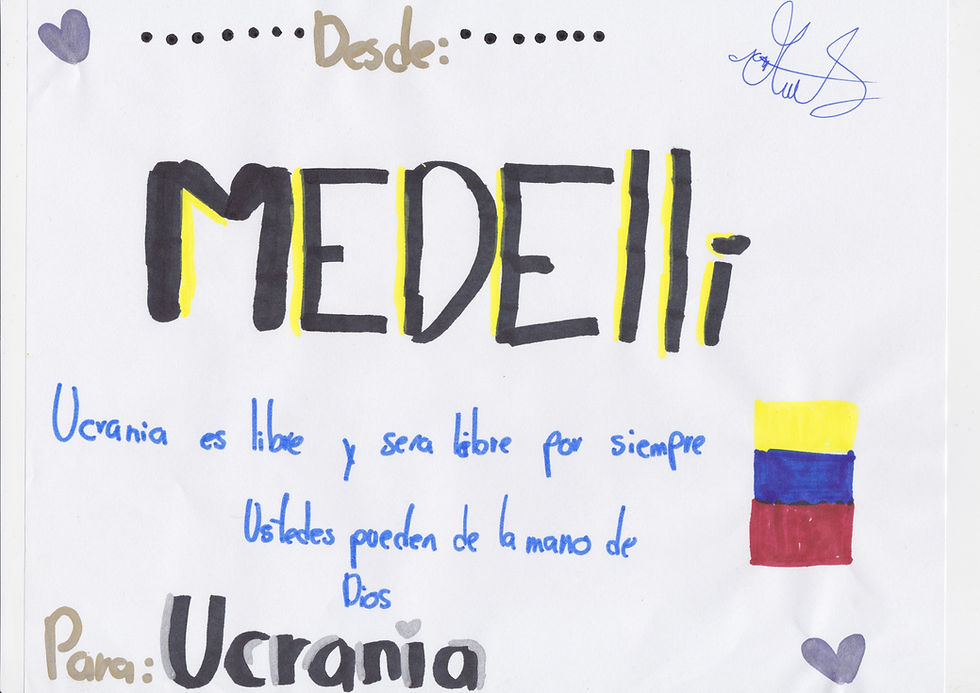


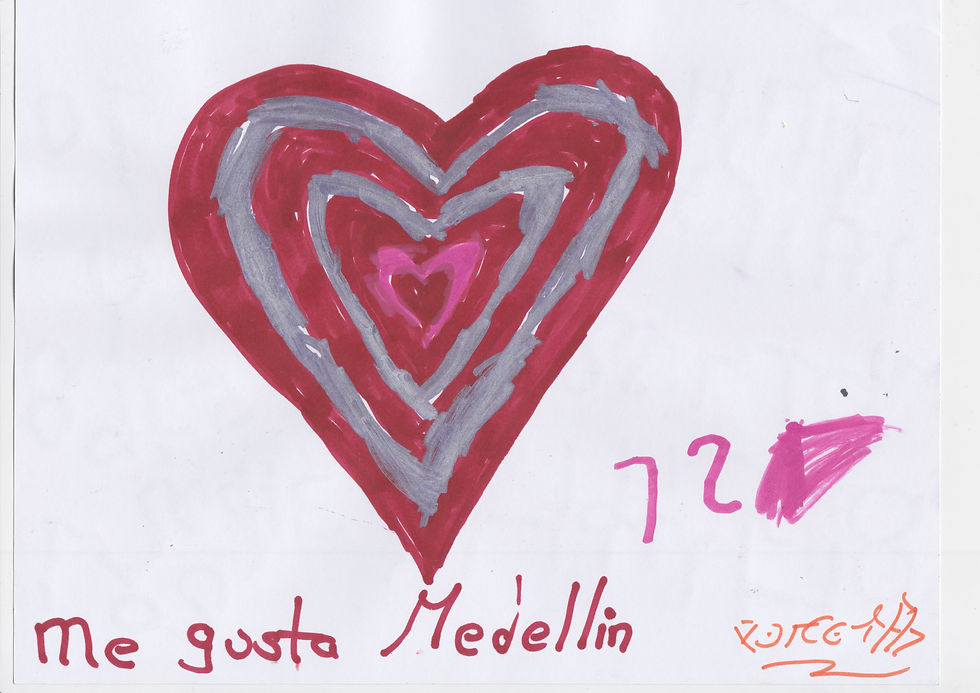


Letters to Colombian Soldiers, written in Medellín during the International Art Biennial of Antioquia and Medellín, 2025